


Every strange car sound has a cause, and knowing the difference between a minor squeak and a serious problem can save you hundreds in repair costs. Whether you’re hearing grinding when you brake, a persistent hum as you accelerate, or alarming knocks from your engine, these sounds provide valuable clues about your vehicle’s condition.
In this comprehensive guide, we’ll break down the most common car noises drivers in Northglenn, Thornton, and Commerce City experience, explain the science behind why vehicles make these sounds, and show you our diagnostic process at Accurate Automotive. You’ll learn how to identify urgent issues, what details help mechanics diagnose problems faster, and why preventive maintenance stops most noises before they start.
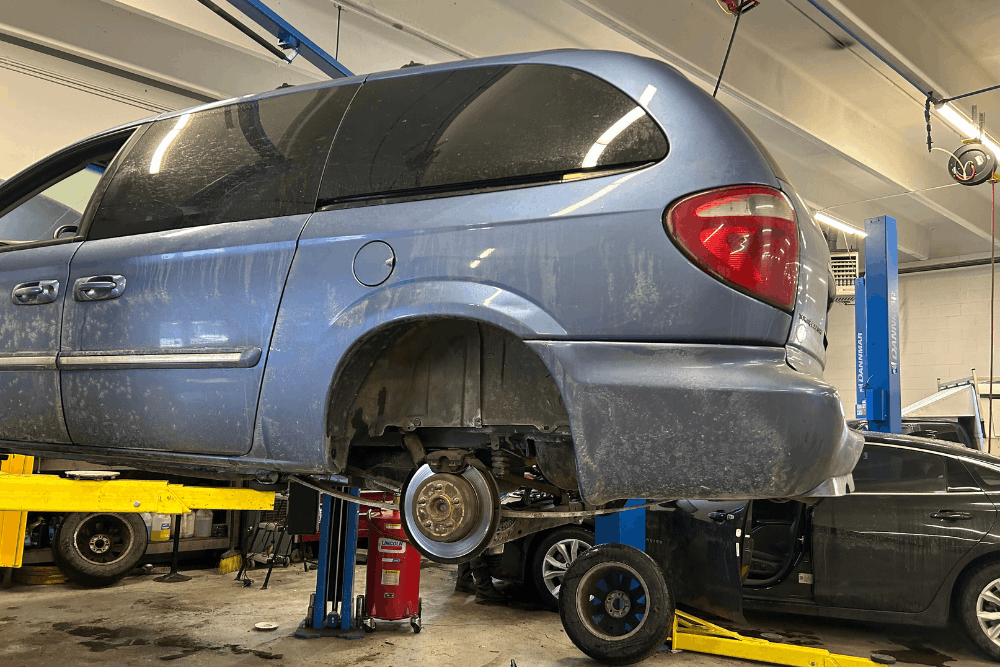
Why Colorado Drivers Need to Pay Attention to Car Sounds
Your vehicle uses sounds as an early warning system. Ignoring these signals can transform a simple repair into a major expense that could have been prevented.
Think of car noises like symptoms at a doctor’s office. A grinding noise when braking could indicate worn brake pads scraping against your rotors, potentially compromising your ability to stop safely. That humming noise when accelerating might point to wheel bearing issues that could affect your vehicle’s stability.
The Sound Decoder: Common Car Noises and Their Meanings
Grinding Noise from Brakes
A grinding noise when braking is one of the most critical sounds to address immediately. This metallic scraping typically indicates your brake pads have worn down completely.
What causes grinding brakes:
- Worn Brake Pads: No friction material remaining on the pad surface
- Debris Trapped: Foreign objects caught between the pad and rotor
- Rust Buildup: Surface corrosion after your vehicle sits unused
- Hardware Issues: Damaged brake components or worn calipers
This sound means metal is scraping metal, and every mile you drive is causing additional damage to your rotors.
Humming or Droning Noise When Accelerating
A humming noise when accelerating often stems from your wheel bearings or tires. This sound typically increases with speed and may change pitch during turns.
Common sources include:
- Wheel Bearings: Worn bearings create friction and heat
- Tire Wear: Uneven tread patterns are causing road noise
- Differential Problems: Issues in rear-wheel drive vehicles
- CV Joint Wear: Front-wheel drive drivetrain complications
The tricky part about humming noises is that they can seem to come from everywhere at once. A systematic inspection helps identify whether the issue is in your wheels, tires, or drivetrain.
Engine Knocking or Pinging Sounds
Engine knocking is a sharp, metallic tapping sound that often indicates improper combustion. This noise demands immediate attention because it can lead to serious engine damage.
Potential causes:
- Fuel Quality Issues: Low-octane fuel in a high-compression engine
- Carbon Deposits: Buildup on cylinder walls or pistons
- Bearing Wear: Excessive clearance in engine bearings
- Overheating: High temperatures cause pre-ignition
- Sensor Failure: Faulty knock sensors not adjusting timing
Engine knocking in Northglenn vehicles often relates to our altitude and fuel quality. The thinner air at higher elevations can affect engine performance, making proper fuel selection and maintenance even more critical.
Whining and Squealing Sounds
High-pitched noises from your engine area or brakes can indicate various issues:
Whining noises typically mean:
- Power Steering: Pump running low on fluid or failing internally
- Belt Issues: Worn serpentine belt or misaligned pulleys
- Alternator Problems: Bearing failure creates friction
Squealing sounds often indicate:
- Brake Wear Indicators: Metal tabs designed to alert you
- Glazed Brake Pads: Heat-hardened surface creates vibration
- Belt Wear: Cracked serpentine belt slipping on pulleys
Many brake pads include small metal tabs called wear indicators that intentionally create a squealing sound when pads reach minimum thickness. This early warning gives you time to schedule service before the grinding stage begins.
Quick Reference: Car Noise Diagnosis Chart
| Sound Type | When It Occurs | Likely Source | Urgency Level |
|---|---|---|---|
| Grinding | During braking | Worn brake pads, damaged rotors | High – Address immediately |
| Humming / Droning | Accelerating or at speed | Wheel bearings, tire wear | Medium – Schedule soon |
| Knocking | Engine running, worse under load | Engine combustion issues, bearing wear | High – Diagnose quickly |
| Whining | Engine running, changes with RPM | Power steering, belts, alternator | Medium – Monitor and schedule |
| Squealing | Braking or constant | Brake wear indicators, belt issues | Medium – Plan service |
| Clicking | Turning | CV joints, suspension components | Medium – Inspect promptly |
Communicating Car Problems to Your Northglenn Mechanic
When you schedule your diagnostic appointment, providing detailed information helps technicians diagnose your issue more efficiently.
Key details to share:
- Describe the Sound: Compare it to familiar sounds (grinding metal, whistling kettle, clicking pen)
- Note Timing: When does it happen? Accelerating, braking, turning, or at idle?
- Identify Location: Front, rear, left, right, or under the hood?
- Speed Dependency: Does it change with vehicle speed or engine RPM?
- Recent Events: Did it start after hitting a pothole or during specific weather?
The more specific you can be, the faster a qualified technician can narrow down the possible causes and begin diagnostic work.
The Science Behind Why Cars Make Noise
Understanding why vehicles create sounds helps you appreciate the importance of addressing them quickly.
- Metal-on-Metal Contact: When protective layers like brake pad material wear away, hard surfaces contact each other, creating grinding sounds and accelerated wear.
- Bearing Failure: Bearings contain precision balls or rollers that allow smooth rotation. When these wear out, the resulting play creates humming or rumbling as components move outside their designed parameters.
- Combustion Irregularities: Your engine relies on precisely timed fuel ignition. When timing is off or octane ratings are wrong, fuel ignites at the wrong moment, creating knocking sounds and potential engine damage.
- Belt Slippage: Serpentine belts must maintain proper tension and grip. When they stretch, crack, or pulleys misalign, the belt slips rather than grips, creating squealing sounds.
Digital Vehicle Inspections: Seeing What You're Hearing
At Accurate Automotive in Northglenn, Colorado, we don’t just tell you what’s wrong; we show you. Our comprehensive Digital Vehicle Inspections include photos and videos of problem areas, making it easy to understand exactly what’s creating those concerning sounds.
Our diagnostic process:
- Test Drive Replication: Experience the noise firsthand
- Visual Inspection: Thorough examination of suspected components
- System Testing: Checking all related parts
- Photo and Video Documentation: Clear evidence of the issue
- Clear Explanation: Written estimates with detailed breakdowns
You’ll see the worn brake pads, hear the grinding wheel bearing on video, or see the serpentine belt’s excessive wear. This transparent approach means you’re never guessing about what your vehicle needs.
Concerned about a strange noise in your vehicle? Schedule your diagnostic appointment online or call us at (303) 451-6880. Visit us at 10651 Irma Dr., Northglenn, CO 80233.
Preventative Maintenance for Northglenn Vehicles
Many concerning car noises can be prevented with regular preventative maintenance. Catching problems before they announce themselves saves money and stress.
Essential preventative maintenance services:
- Brake Inspections: Regular checks every 12,000 miles
- Wheel Bearing Service: Inspection during tire rotations
- Belt Replacement: Following manufacturer intervals
- Fluid Monitoring: Power steering, transmission, and coolant checks
- Suspension Checks: Component inspection before wear creates noise
- Engine Diagnostics: Monitoring combustion quality and sensor function
We offer same-day service for most maintenance needs with shuttle service, loaner cars, and after-hours drop-off options to fit vehicle care into your busy schedule.
Why Choose Accurate Automotive for Car Noise Diagnosis
When your vehicle starts making unusual sounds, you need expertise you can trust:
- ASE-Certified Technicians: Specialists certified for all vehicle types, including European and EV models
- Advanced Equipment: State-of-the-art diagnostic tools
- Transparent Process: Digital Vehicle Inspections show exactly what we find
- Complete Services: Brakes, transmission, suspension, and engine diagnostics
- Quality Guarantee: 3-year/36,000-mile nationwide warranty
- Local Focus: Community-centered shop built on trust and integrity
We focus on clear explanations, honest recommendations, and quality repairs that solve the problem right the first time.
FAQs About Car Noises
Why is my car humming when I accelerate?
A humming noise when accelerating typically indicates worn wheel bearings or uneven tire wear. The sound increases with speed and may change during turns, signaling it’s time for inspection. Professional diagnosis can identify the exact cause and recommend the appropriate repair to restore quiet, safe operation.
What does a grinding noise when braking mean?
Grinding noise when braking means your brake pads have worn completely down, allowing metal backing plates to scrape against your rotors. This requires immediate attention to prevent rotor damage and maintain safe stopping ability. Prompt brake service can often save your rotors from needing replacement.
Why is my car engine knocking?
Engine knocking is caused by improper combustion, often from low-octane fuel, carbon buildup, or worn engine bearings. This metallic tapping can lead to serious engine damage if ignored. Professional diagnostics can identify whether the issue is fuel-related, carbon deposits, or internal engine wear.
What does a whining noise from my engine mean?
A whining noise from your engine usually indicates a problem with your power steering pump, serpentine belt, or alternator bearings. The pitch typically changes with engine speed and helps technicians locate the source. Early diagnosis prevents these minor issues from becoming expensive failures.
Can I drive my car if it's making unusual noises?
Driving with unusual car noises depends on the sound and severity, but many noises indicate safety concerns that shouldn’t be ignored. Grinding brakes, loud knocking, or metal-on-metal sounds require immediate attention, while minor squeaks might allow time to schedule service. When in doubt, have a professional evaluate the noise to prevent further damage.
Schedule Your Car Noise Diagnosis in Northglenn Today
Don’t let mysterious car noises keep you worried or put your safety at risk. Whether you’re hearing grinding noise brakes, a humming noise when accelerating, engine knocking, or any other concerning sound, our team is ready to help.
Visit Accurate Automotive at 10651 Irma Dr., Northglenn, CO 80233, or call us at (303) 451-6880 to schedule your diagnostic appointment. We proudly serve drivers throughout Northglenn, Thornton, Commerce City, Westminster, Brighton, and Broomfield with honest, reliable auto repair services. Let us decode those car noises and get you back on the road with confidence.